Episode 11 - The Hidden Reason Your Staff Don't Take Ownership
May 15, 2026
Transcript
I start every consulting session with one question. That question is, "What's not working?"
I hear a bucket of very consistent answers every single time, including this one. Nobody takes ownership. If I'm training supervisors, I hear that response over and over again. Nobody takes ownership. Nobody takes ownership. And it's not just the words that I hear. It's not a casual nobody takes ownership. It's an impassioned statement. The words come with eye rolls, hand gestures of disgust, and complete frustration. Supervisors are clearly feeling lost and overwhelmed.
And when I ask, why do you think staff are not taking ownership? After all, I am a behavioralist and I like to dig down and understand those pieces and parts. The same predictable responses come over and over again. I don't know. Staff just don't care. I don't know. Staff are lazy. The staff just need to try harder. I also hear staff should already know what to do. And one of my favorite assumptions that shows up is, is nobody has any common sense anymore. But here's the problem with that thinking. Ownership is not a personality trait. Ownership is a system outcome. Let me say that again.
Ownership is not a personality trait. The people who are not performing well are not defective human beings.
Ownership is a system outcome.
Hello and welcome to Provider Power with your host, Sara Sherman. This is the place for IDD leaders to find solutions, support, and insight ready to power up your provider game. Let's get going.
If your staff don't know exactly what done well looks like, if there's no system to reinforce follow through, if staff are only getting feedback when something goes wrong, if leaders step in and fix instead of coach, or if managers are passing written warnings around like candy on Halloween instead of examining processes, then you don't actually have an ownership problem.
You have a clarity problem. You have a follow through problem. You have a leader management behavior problem. Yes, a leader management behavior problem.
It's critical that the entire management team remembers that. It is a rare staff person who wakes up in the morning and decides, today I'm going to do half the job and hope no one notices. Today I think I'm just going to suck at my job. Sure. Yes. Yeah. I know exactly what to do and I know exactly how to be a good employee. I know how to serve individuals well and ensure that I keep my job for as long as I would like to have it. But today I'm not going to do any of that. Today I am not going to serve the individuals I care about. I'm going to draw the wrath of my supervisor and I'm going to sit around doing nothing, making my workday last as long as I possibly can. It is the rare staff person who says anything remotely like that. But we tend to think that that's exactly what's happening.
Staff respond to the environment or culture that they are in. And if it is common for your staff to show up and not work or not work correctly, your environment is quietly teaching staff to just get through the shift, to tolerate the critique and complaints of management that no serious consequences are really going to happen. After all, they can't keep the shifts full that they have. They're certainly not going to replace me, and that tomorrow is another day. Maybe that day will go better. So when leaders say staff need to take more ownership, what they are really identifying is that the company hasn't built a system where ownership is obvious, expected and reinforced. And until the agency does build such a system, you can try to motivate people all you want. That motivation will not stick.
Why is that? Well, because it can't stick. There's no structure to support staff success for success, your staff actually have to fight against the company culture and structure. And that is a fight that is too big to win. So what are you missing?
You're missing clearly defined expectations. You're missing training. You're missing the structure that staff require to successfully execute all of their expectations. You are missing the structure required to drive each staff person to perform correctly.
You're missing clear service plans and a way to formally celebrate and acknowledge staff who are doing the work correctly. And instead of having the solid scaffolding that I've just outlined, you, you probably have an overdependence on frontline supervisors to force work to happen. Yet these supervisors are not trained to produce the results of shifting their staff into a position of ownership. Agencies have to have a cohesive structure that includes every one of the points I identified. And what are those points again?
One, clearly defined expectations. For example, if you say make sure individuals have fun things to do, but you really mean sit down with the people you serve, learn what they like, develop ways to explore those interests. Identify places to go based on those interests. Have Saturday afternoon in home activities based on those interests. Make sure that you have evening dinner conversations based on those interests. Check the Internet for community activities that are related to those interests, you are not going to get the outcomes that you want.
Number two, training that supports achieving those expectations. If you are passing staff through orientation telling them not to worry if there's things they don't understand, just ask the supervisor when they get to their work location, you are going to have staff who are not trained well enough to perform their job duties.
Number three, Logical operational instructions that drive performance to meet expectations. If you have no written procedures for staff to reference and you expect staff to memorize all their tasks and perform all the steps correctly, you're actually ensuring your staff will fail. You need to have clear service plans. Clear here means that the service plans outline service needs and how those needs will be met. So if you aren't taking good documentation data to service planning meetings, those service plans will not contain sufficient instruction to move the needle on outcomes.
You need supervisors who are trained to coach staff success. That's number five. If you aren't training supervisors to understand the behavior they see from staff and to act accordingly, your supervisors will have no tools available beyond begging and writing people up. And number six, Celebration of success, meaning an obvious and intentional identification that staff are working correctly.
Which means individuals are making progress in their goals and dreams. Staff will not believe they are capable of getting the work right. They will not feel fulfilled making a difference in people's lives like we promised they could when we hired them. And they will be discouraged and leave. Or. Or they will be discouraged and stay if there's no celebration of success.
You do need all six elements in your power performance architecture.
But what will you do while you're building that architecture? I mean, you can't wait around for all these pieces and parts to be built before you contend with staff who are missing the performance mark today. Well, it just so happens that I've got you covered.
In a few days, I'm hosting a one hour free masterclass called From Lazy Staff to High performers. It's at 1pm Eastern, April 23, 2026. Just go to www.providerpowermoves.com/lazy to register.
You'll learn how to replace the idea of lazy staff with behaviors you can actually name and fix. Create accountability systems that move staff toward their job correctly and independently. And you'll learn how to take back leadership control of results instead of hoping motivation magically improves. And you'll walk away with a practical plan you can use immediately. Like immediately on your next shift, the next time you show up at work to improve DSP performance.
Because sometimes you just need some simple tips that produce big results right away. So again www.providerpowermoves.com/lazy to register.
Until the next time. Power on.
Yours free: 🐝 "5 Power Moves That Will Make or Break Your Provider Success"
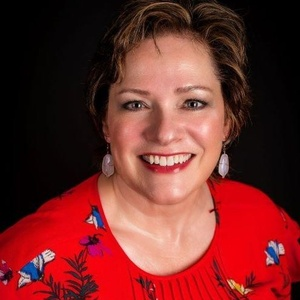
As a sought-after problem solver in the IDD community, Sara Sherman helps providers, governments, and organizations solve their most challenging problems once and for all.
With decades of experience in all aspects of the developmental disabilities system, Sara teaches practical, implementable, and repeatable steps that produce measurable and sustainable results to ensure those problems stay gone for good.